
Technology
We decreased the footprint.
Removed the tubing and guesswork.
The Automated Compressive Tourniquet System is built in three moves. Each one takes something out of the operating room rather than adding to it.
Watch
ACTS in Motion
Modular ACTS: five sizes become two.
Legacy cuffs are cylinders fitted to conical limbs, which is why so many sizes exist. ACTS uses an adaptive contour that conforms across a much wider circumference range, so a Small and a Large cover the case mix that previously required a full size set.
Less inventory, simpler sterile processing, and no mid-case hunt for a different cuff.
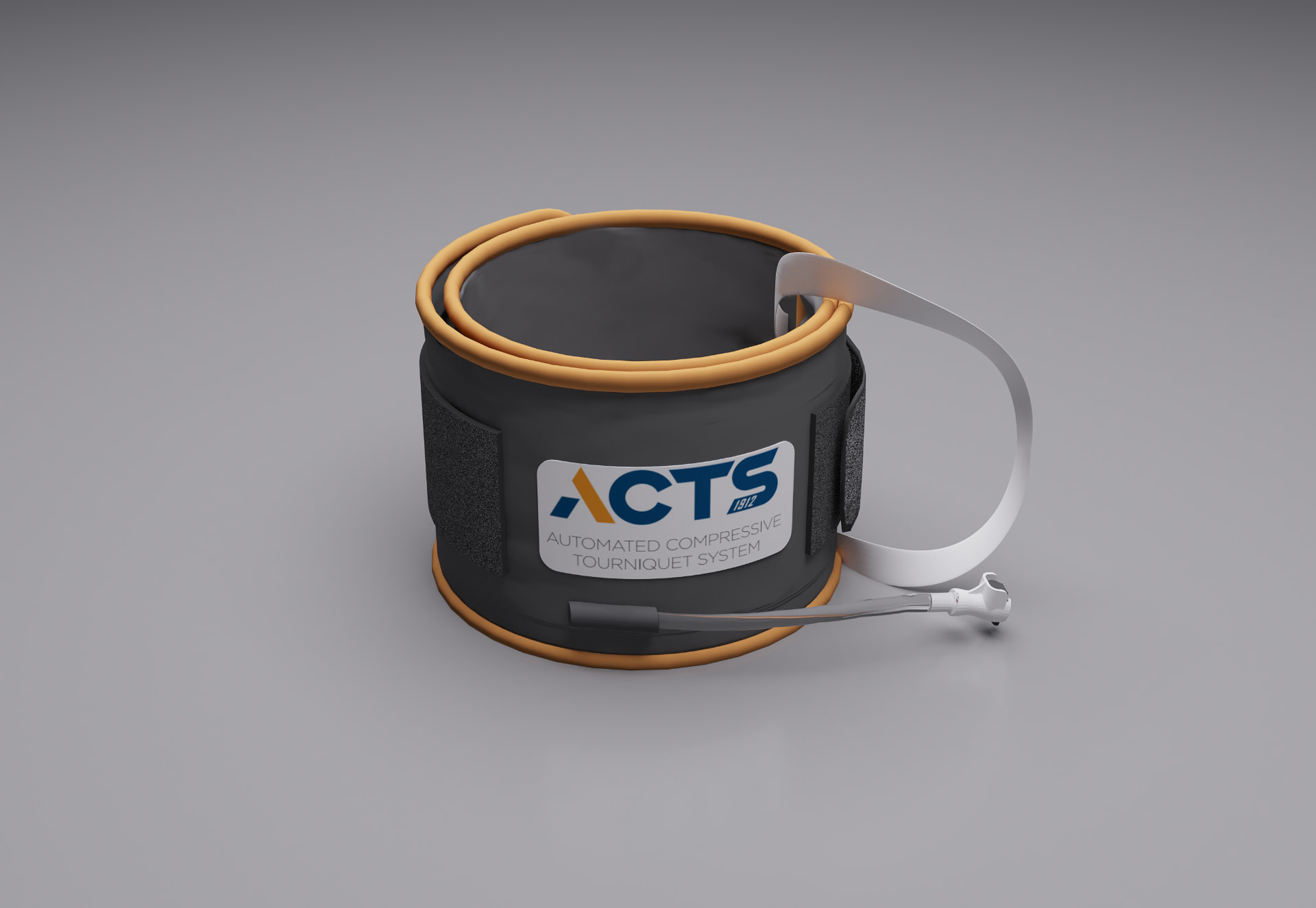
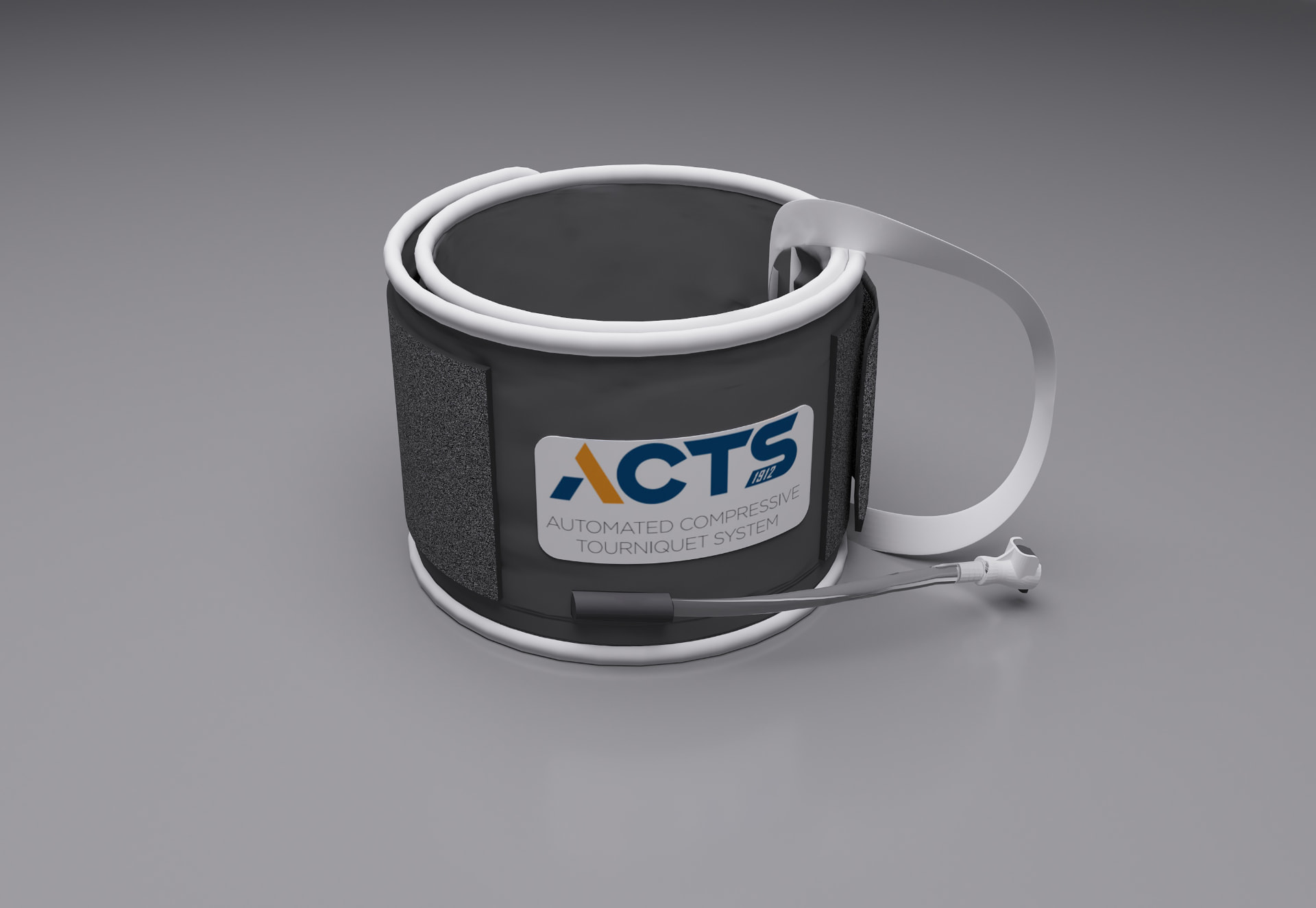
Untethered ACTS: the compressor moves into the cuff.
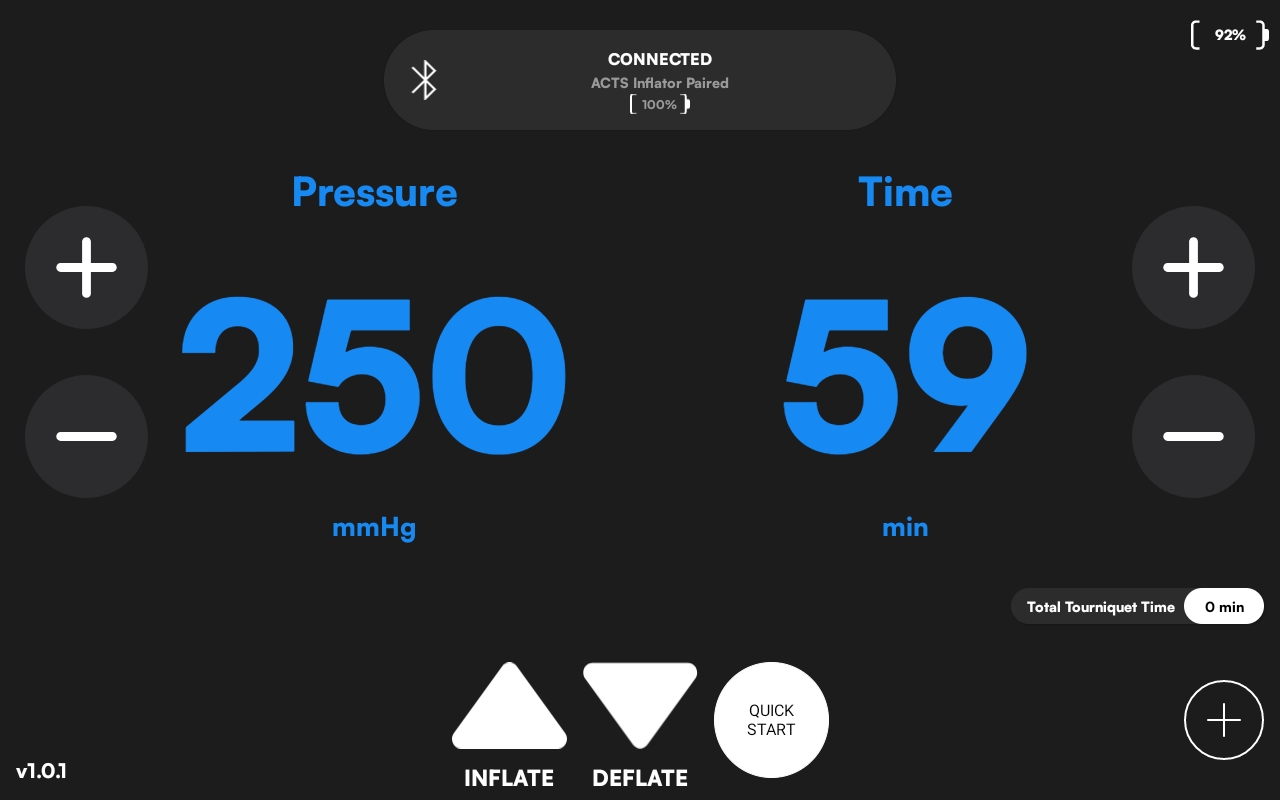
A battery-powered micro-pump and pressure sensor are integrated directly into the cuff body. There is no pole-mounted compressor to wheel in, no power cord, and no tubing running across the floor between the machine and the patient.
Fewer objects in the room means fewer trip hazards, faster turnover, and one less piece of capital equipment per operating room.
Zero space footprint in the OR
No tubing runs
No power cords
Under 60-second setup
ACTS intelligently: pressure measured, not assumed.
ACTS detects limb occlusion pressure for the individual patient and holds the lowest effective pressure, rather than defaulting to a fixed protocol number. Inflation timing is tracked automatically and surfaced as usable data.
Lower pressures, held for measured durations, are the direction the clinical literature has been pointing for years — this makes it the default behavior.
Side by side
ACTS vs. legacy systems
Comparison reflects Bezalel Innovations’ assessment of currently marketed pneumatic tourniquet systems.
The device
Clinical ACTS
Two ACTS cuffs applied and running in a live case. Each cuff carries its own pump and sensor, so the limb is prepped and pressurized without a compressor, tubing, or cords entering the sterile field.
User interface
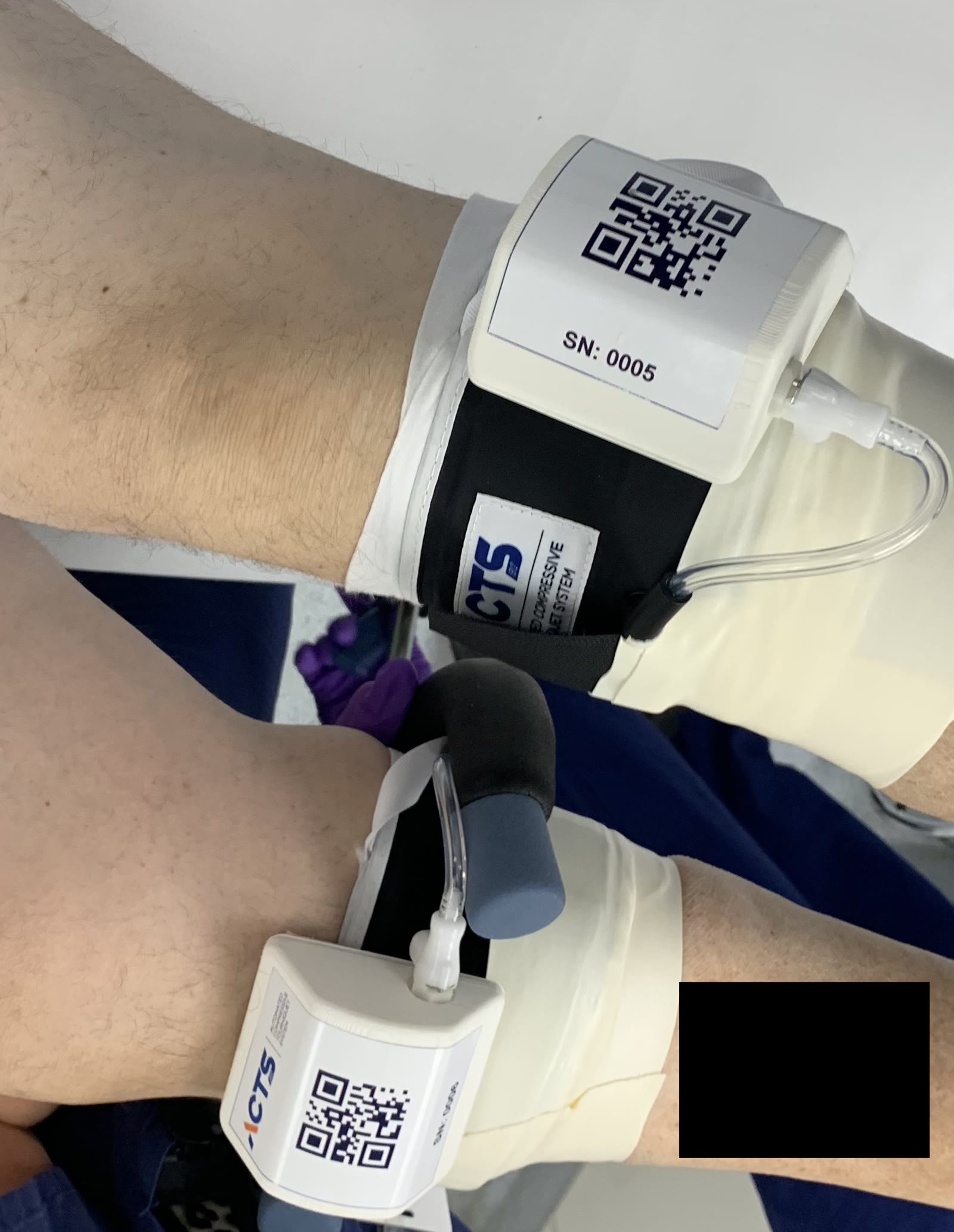
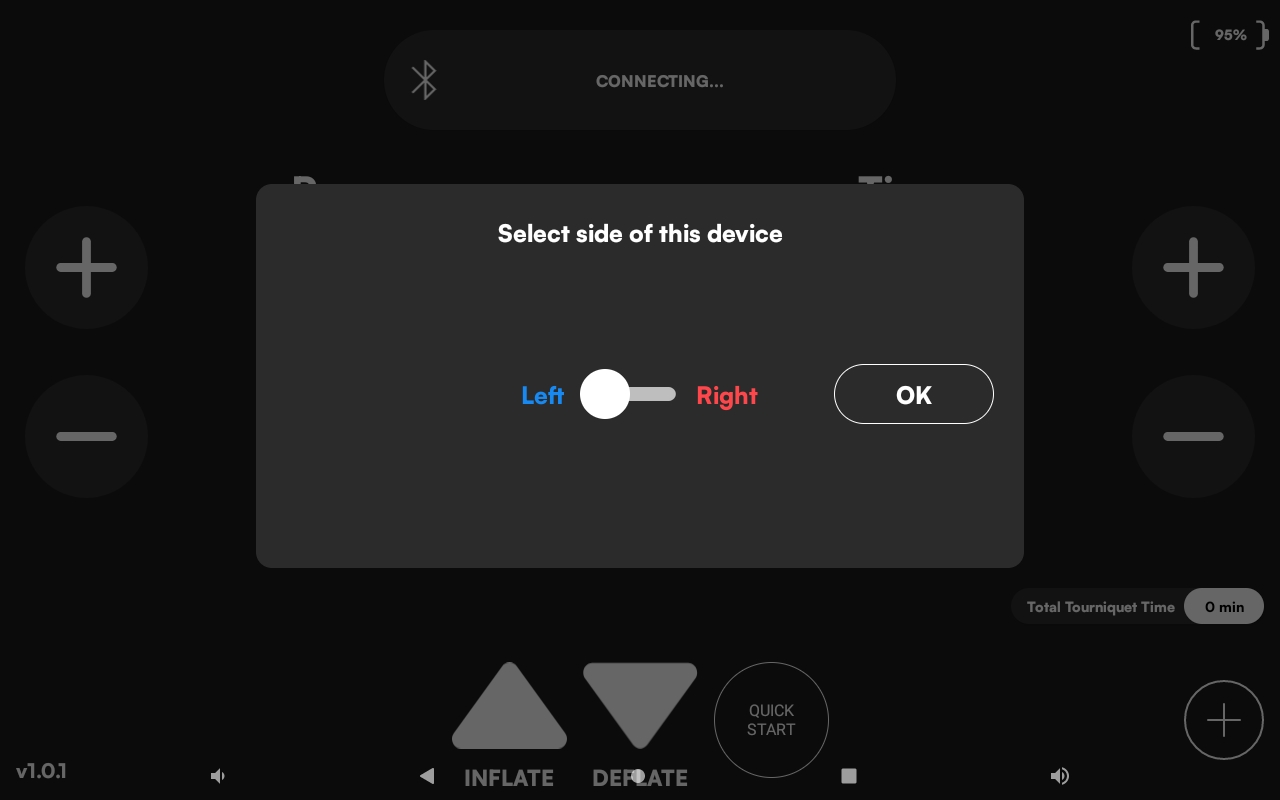
ACTS on command: the ACTivator interface.
The ACTS inflator pairs wirelessly with a tablet console (ACTivator). Pressure and time are set with large, glove-friendly controls, total tourniquet time is tracked automatically, and each cuff is assigned to a side of the patient at setup.
Commercial model
ACTS-as-a-Service
Facilities subscribe rather than purchase. The subscription covers cuffs and consumables on a predictable per-case or per-room basis, and includes the usage data that supports quality review and utilization planning. No compressor to buy, service, or depreciate.